
Did you know collage was first used by artists like Picasso and Braque in the early 20th century? This technique has become a key part of mixed media art. It lets artists mix different materials and textures to express themselves.
Starting with collage art might seem hard, but it’s really easy. With a few basic tools and some tips, you can make your own unique art. This guide will show you the basics of collage. We’ll cover the materials and collage techniques you need to get started.
Key Takeaways
- Understand the basics of collage art and its history
- Learn the necessary materials needed to get started
- Discover simple collage techniques for beginners
- Explore the versatility of mixed media art
- Unleash your creativity and start creating your own collage art
What is Collage Art and Why Should I Try It?
Collage art is about combining different parts to make something new. It has a long history, spanning decades. It’s not just about sticking paper together; it’s about telling stories and evoking feelings.
The History of Collage Art
Collage art started in the early 20th century with artists like Pablo Picasso and Georges Braque. They used paper collage, a new way to make art. This change led to many new art styles, from Dadaism to Surrealism.
Over time, collage art has grown and changed. It now uses many materials and techniques, showing its flexibility and creativity.
| Period | Notable Artists | Characteristics |
|---|---|---|
| Early 20th Century | Pablo Picasso, Georges Braque | Papier collé, introduction of mixed media |
| Mid-20th Century | Hannah Höch, Kurt Schwitters | Dadaism, Surrealism, use of found objects |
| Contemporary Era | Various global artists | Digital collage, mixed media, diverse themes |
Modern Interpretations of Collage
Today, collage art uses many materials and techniques. Artists now use digital tools and software, along with traditional materials. This makes collage art exciting and new.
Exploring collage today, I see artists expressing themselves in unique ways. It’s inspiring to see how they use collage to share their stories.
Benefits of Creating Collage Art
Creating collage art boosts creativity and self-expression. It’s also a way to relax and express yourself. The process of making a collage can be very rewarding.
Collage art is for everyone, whether you’re new to art or have been doing it for years. It’s a great way to explore your creativity and have fun.
Gathering Your Materials for Collage Art
Starting your collage art journey means knowing what materials you have. You’ll find many options, from different papers to textures and tools. These tools help you work with your materials.
Types of Paper and Textures
The paper and texture you pick can change your collage’s look and feel. Try using:
- Patterned papers: They add color and interest. Look for papers with stripes, dots, or flowers.
- Textured papers: Papers with different textures, like rough or smooth, add depth.
- Recycled materials: Old newspapers, cardboard, or magazine cutouts make your art eco-friendly.

Tools You’ll Need
You’ll need some basic tools to work with your materials. These include:
- Scissors: Sharp scissors are key for cutting your materials into the right shapes and sizes.
- Adhesives: You’ll need glue or another adhesive to stick your materials. The right adhesive can change your collage’s look.
- Tweezers: Tweezers are great for precision, useful for small pieces.
Where to Find Inspiration
Finding inspiration is key. For collage art, look to:
- Nature: Nature’s colors, textures, and patterns are inspiring.
- Magazines and books: Browsing through magazines or books can spark ideas, based on images or themes.
- Online platforms: Pinterest or Instagram are full of collage art to inspire you.
With a variety of materials and tools, and inspiration from many places, you’re ready to make unique collage art.
Understanding the Different Styles of Collage
Exploring collage art, I see a wide range of styles. Artists use many approaches in this dynamic medium. It has grown from different artistic movements and new technologies.
Collage art is versatile. It can use many techniques and materials. This lets artists show their creativity in new ways. We’ll look at the various collage styles, their features, and what they allow artists to do.
Classic Collage Techniques
Classic collage uses old methods like cutting and pasting. Artists have used these for centuries. Today, they’re popular again.
- Cut-and-Paste: A basic method where artists cut shapes from paper and paste them onto a surface.
- Tearing and Layering: This involves tearing paper into strips and layering them for texture and depth.
Digital Collage: The New Frontier
Digital collage is a new take on old techniques. It uses digital tools to make complex images.
Digital collage has big advantages:
- Flexibility: It lets artists easily change and edit their work.
- Precision: Digital tools help artists get very precise, adding fine details.
Mixed Media: Combining Art Forms
Mixed media collage mixes different art forms with traditional collage. This creates a unique, layered piece.
This style is full of possibilities. Artists can mix materials and techniques for a rich look.
- Combining Paint and Collage: Adding paint to collage elements brings color and texture.
- Incorporating Found Objects: Using found objects adds meaning and interest to the artwork.
Starting Your First Collage Project
It’s time to start your first collage project. This is where your creativity meets technique. The possibilities are endless.
Finding Your Theme
Every great collage starts with a theme or concept. It could be nature, abstract emotions, or memories. Think about what inspires you or what message you want to share through your art.
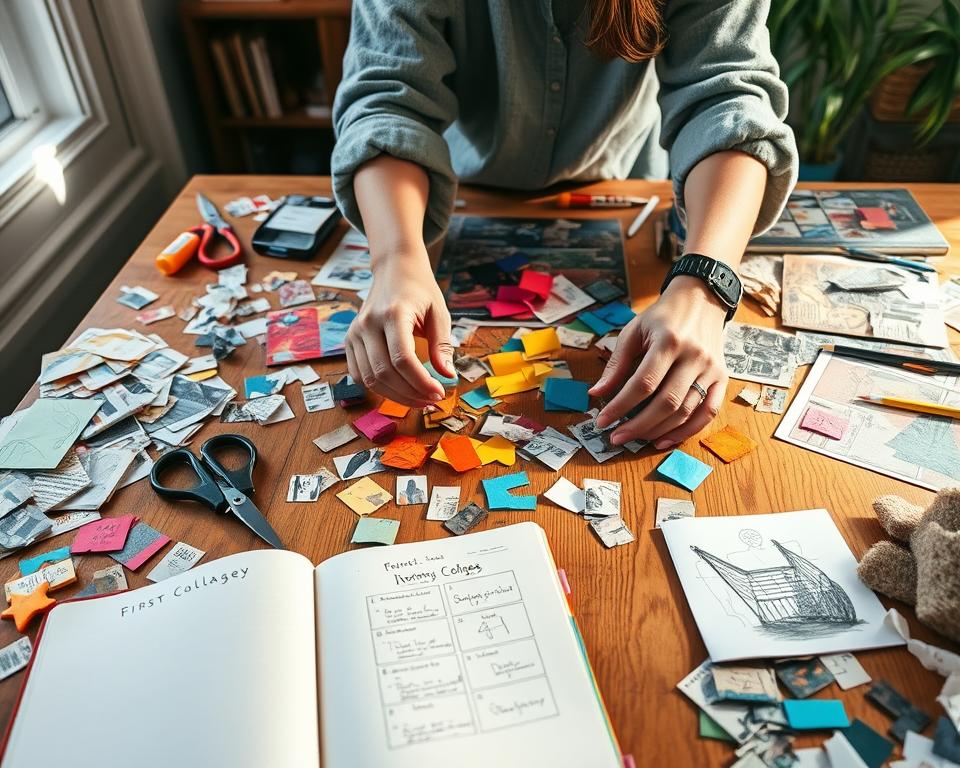
Start with a simple idea like “summer” or “urban life.” Brainstorm and jot down keywords related to your theme. For “summer,” your list might include “beach,” “sunset,” “ice cream,” and “vacation.” These words will guide your material selection and composition planning.
Planning Your Composition
Once you have a theme, plan your composition. Think about balance, color palette, and the story you want to tell. Sketch out a rough draft or create a digital mockup to visualize your ideas.
Consider the rule of thirds, symmetry, or other composition techniques. This will make your collage visually appealing. Think about textures and layers you want to include. Mixing different textures can add depth and interest to your collage.
Tips for Layering and Depth
Layering is key in collage art. It adds depth and dimension. Start with a background layer, which could be a single piece of paper or a mixture of textures.
Then, add elements on top, considering how each piece interacts with the others. To create depth, vary the size and placement of your elements. Larger items in the foreground and smaller ones in the background can create a sense of distance. Also, play with colors – warmer colors tend to come forward, while cooler colors recede.
| Layering Technique | Description | Effect |
|---|---|---|
| Background Layer | Start with a base layer that sets the tone for your collage. | Establishes the foundation and mood. |
| Overlapping Elements | Layer elements on top of each other, varying in size and texture. | Creates depth and visual interest. |
| Color Contrast | Use contrasting colors to make elements stand out. | Draws the viewer’s eye to specific parts of the collage. |
Starting your first collage project is a step into a world of creativity and self-expression. By finding your theme, planning your composition, and mastering layering techniques, you’ll be well on your way to creating stunning collage art.
Experimenting with Colors in Collage Art
Exploring collage art, I see that colors are more than just pretty. They stir emotions. The right colors can turn a collage into a moving piece of art that speaks to people.
The Color Wheel and Its Importance
The color wheel is key to knowing how colors work together. It’s a circular chart that shows color relationships and mixing. Artists use it to pick colors wisely in their collages.
Primary Colors are the basic colors that can’t be made by mixing others. They are red, blue, and yellow. Secondary Colors come from mixing two primaries: green (blue + yellow), orange (red + yellow), and purple (blue + red).
| Color Type | Colors | Description |
|---|---|---|
| Primary | Red, Blue, Yellow | Base colors that cannot be mixed from other colors |
| Secondary | Green, Orange, Purple | Colors created by mixing two primary colors |
Choosing a Color Palette
Picking a color palette is vital for a cohesive collage. Artists can pick from monochromatic, complementary, or analogous palettes. Each choice affects the collage’s mood.
“The colors you choose for your collage can evoke different emotions and moods. For instance, warm colors like red and orange can create a sense of energy, while cool colors like blue and green can induce calmness.”
Balancing Colors for Visual Impact
Color balance is key for a collage that looks good. Artists must think about contrast, harmony, and the 60-30-10 rule. This rule helps in balancing colors.
By trying out different color mixes and color theory, artists can make collages that look great and touch the heart.
Incorporating Text and Typography
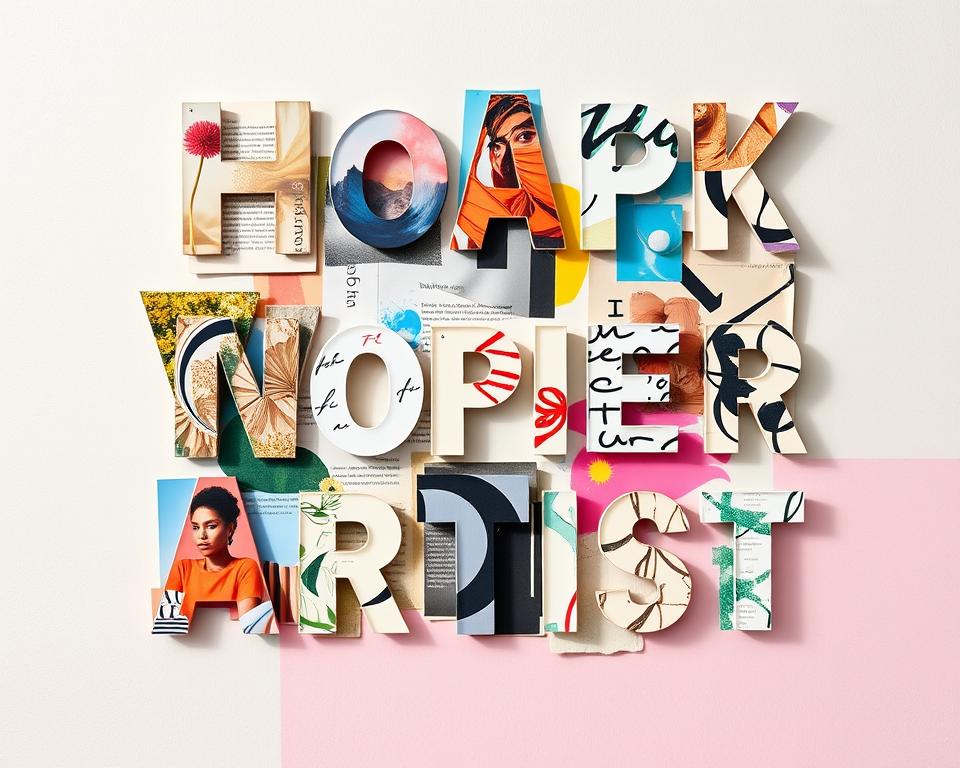
Text and typography are key to making collage art stand out. They add depth and interest to your work. Whether you’re new or experienced, knowing how to use typography can make your art better.
Finding the Right Fonts
The right font can change the mood of your collage. Think about the theme and feeling you want to share. Serif fonts give a classic vibe, while sans-serif fonts are modern.
For unique fonts, check out collage inspiration sites or typography groups. These places offer lots of collage materials and ideas to improve your work.
Mixed Fonts Techniques
Mixing fonts can make your collage more interesting. But, it’s important to keep it balanced. Stick to two or three fonts to avoid too much.
Try pairing a bold sans-serif font with a delicate serif font. Play with sizes and weights to find your style.
Creative Ways to Use Text in Collage
Text can tell stories, share messages, or just decorate your collage. Try tearing or layering text for texture. Handwriting or calligraphy can add a personal touch.
“The art of collage is all about experimentation and pushing boundaries. Don’t be afraid to try new things and see where they take you.”
Using text and typography well can make your collage art more engaging. The most important thing is to have fun and experiment.
Overcoming Creative Blocks
When inspiration seems to have vanished, there are several strategies that can help you get back on track with your Collage Art. Creative blocks are a normal part of the artistic journey. But knowing how to overcome them can make all the difference.
Daily Practices to Spark Inspiration
Engaging in daily practices can significantly boost your creativity. Simple activities like taking a walk, observing nature, or doodling can stimulate your mind. They inspire new ideas for your mixed media art.
As the famous artist,
“The main thing is to be moved by the sight of nature, to be vividly impressed by it, and then to put this impression on paper.”
– Vincent van Gogh.
Setting aside time each day to work on small collage exercises can also help. This could involve experimenting with different textures, colors, or techniques. These experiments can eventually lead to breakthroughs in your main projects.
Keeping a Visual Journal
Maintaining a visual journal is another effective way to keep your creative juices flowing. By regularly recording your thoughts, sketches, and inspirations, you can track your progress. This practice not only documents your artistic journey but also serves as a valuable resource for future projects.
Including snippets of materials you find interesting, like magazine cutouts or fabric scraps, can add a tactile dimension to your journal. This can be very useful for collage inspiration. It allows you to revisit and reimagine these elements later.
Collaborating with Other Artists
Collaborating with fellow artists can be a powerful catalyst for creativity. By working together, you can share ideas, learn from each other’s techniques, and gain new insights into your work. This collaborative spirit can help you see your Collage Art from fresh perspectives. It can lead to innovative breakthroughs.
Joining local art groups or online communities can provide opportunities to connect with other artists. Participating in collaborative projects can be a great way to engage with others who share your passion. Their energy and creativity can be quite contagious.
Showcasing and Sharing Your Collage Art
As a collage artist, I’m always looking for new ways to show my art and meet others who share my passion. Sharing my work brings me joy and opens doors for feedback, collaboration, and growth.
Creating an Instagram Account for Your Art
Instagram is a great place for collage artists to share their art. I have a special account for my art, where I share my journey from idea to finished piece. It’s a place to connect with people who love contemporary collage.
To start, use the right hashtags, post high-quality images, and interact with other artists. This way, you can grow your following and get valuable feedback on your art.
Participating in Local Art Shows
Local art shows are a fantastic way to show off my digital collage and other art to people in my area. These events help me get noticed and meet other artists and possible buyers.
To join in, look for local art events, prepare your art according to the show’s rules, and be ready to talk about your art and what inspires you.
Starting Your Own Blog or Website
Having a personal blog or website is a great way to share my art, including collage art, with more people. It lets me showcase my work, tell my story, and connect with art lovers all over the world.
When setting up a blog or website, pick a platform that’s easy to use, make it look like your artistic brand, and keep it updated with new content to keep your audience interested.
Exploring Collage Art Communities
Collage art communities are great for artists to share ideas and learn from each other. Being part of these communities offers inspiration, support, and chances to work together.
As I delved into collage art, I found connecting with other artists key. It’s not just about making art. It’s about sharing experiences and learning from others.
Online Platforms for Collage Artists
The internet makes it easy to meet other collage artists online. Social media groups, forums, and websites focused on collage art are perfect for artists. They can show their work, share tips, and get feedback.
- Instagram and Facebook groups dedicated to collage art
- Forums like Reddit’s r/collageart
- Specialized art communities on platforms like DeviantArt
Joining Local Art Groups
Online communities are vast, but local art groups offer a more personal touch. Joining a local group means you can take part in workshops, critique sessions, and team projects.
To find local art groups, try these steps:
- Check local art supply stores for postings about art groups
- Look for community centers that offer art classes or workshops
- Use online directories or social media to find local art organizations
Attending Workshops and Classes
Workshops and classes are great for learning new collage techniques and getting hands-on experience. Many local art schools, community centers, and studios offer collage art classes.
Going to these events boosts your skills and lets you meet other artists. This can lead to new collage inspiration and chances to work together.
By joining both online and local collage art communities, you can really improve your artistic journey. You’ll stay inspired and motivated as you explore Collage Art.
Advanced Techniques to Elevate My Collage Art
I’m excited to learn new techniques for my collage art. These methods will add depth and interest to my work. This makes my art more engaging and beautiful.
Trying out different techniques is key. It keeps my art fresh and lets me express myself in new ways.
Using Found Objects
Adding found objects to my art has changed everything. It brings unique textures and dimensions. I use everything from vintage postcards to fabric scraps.
Tips for Using Found Objects:
- Choose objects that fit the theme of your collage.
- Play with different textures and sizes.
- Think about the object’s history and meaning.
Incorporating Photography
I love adding photography to my collage art. It brings a real and personal touch. Mixing photos with other materials creates interesting contrasts.
Benefits of Incorporating Photography:
- It adds a personal element to the collage.
- Creates interesting contrasts with other materials.
- It makes the artwork’s story more engaging.
Experimenting with 3D Elements
Playing with 3D elements adds depth and interest. Techniques like paper maché and fabrications can turn a flat collage into something dynamic.
| Technique | Description | Effect |
|---|---|---|
| Paper Maché | Creating raised surfaces using paper and glue. | Adds texture and dimension. |
| Fabrications | Using fabric to create 3D shapes and forms. | Enhances visual interest and depth. |
By using these advanced techniques, I can grow as an artist. Whether it’s with found objects, photography, or 3D elements, there’s always something new to try.
Reflections on My Collage Art Journey
Looking back, I see how much I’ve grown creatively with Collage Art. It lets me explore my imagination with textures and colors. This way, I create pieces that truly show who I am.
Key Takeaways
My journey with Collage Art taught me patience and the beauty of imperfection. I’ve found that odd combinations can lead to amazing results. This has been a treasure trove of inspiration for me.
A New Perspective
Collage Art has changed how I see the world. I now find beauty in everyday things, turning them into something new and special. This change has not only improved my art but also how I solve problems.
Future Explorations
I’m eager to try new things in Collage Art. I want to use different materials and work with other artists. I hope to inspire others to keep exploring their creativity, no matter their skill level.